
Post Stroke Care Services in Downey, CA
Our stroke recovery program takes a proactive approach to care. We move beyond traditional treatments by integrating best practices in neurological rehabilitation to improve functional outcomes and build long-term resilience.
We know that recovery is a personal journey. Our team works closely with seniors and their caregivers to provide expert guidance and support every step of the way. Rooted in a strong local network of specialized care, we help survivors regain independence, confidence, and well-being long after the clinical phase ends.
Our Post-Stroke Care Services
The core rehabilitation team is composed of physical therapists (PT), occupational therapists (OT), and speech-language pathologists (SLP), each focusing on distinct but overlapping domains of human function.
Physical Therapy and the Mechanics of Ambulation
Physical therapy at Downey Community Health Center prioritizes the restoration of gait and gross motor function through evidence-based neurological rehabilitation in Downey, CA.
We provide hands-on assistance with walking, transfers, repositioning, and daily movement to help reduce fall risks and promote safety. Nursing staff closely monitor each resident’s physical condition, watching for changes in strength, coordination, or endurance and communicating updates to physicians as needed.
When therapy services are prescribed, we help coordinate care and reinforce recommended exercises and mobility techniques as directed by medical professionals. Our focus is to maintain stability, encourage safe activity, and support each resident’s comfort and confidence as they regain mobility.
Occupational Therapy for Independence in Daily Life
Our skilled nursing staff provides attentive support with Activities of Daily Living (ADLs) to help residents maintain dignity while working toward greater independence.
This intervention is critical, as research indicates that more than 40% of stroke survivors experience cognitive impairments that directly impact their functional autonomy. We assist with adaptive strategies, energy conservation techniques, and structured daily routines that promote safety and comfort. Nursing staff also monitor cognitive and functional changes to deliver care plans that meet each resident’s evolving needs.
By providing consistent supervision and personalized assistance, we help residents rebuild confidence in their daily activities while ensuring their overall health and well-being remain the top priority.
Speech Pathology
Speech-language pathology is a cornerstone of our neurological rehabilitation in Downey, CA, addressing the communication and swallowing disorders that often follow a stroke.
When a stroke impacts the brain’s left hemisphere, it can result in aphasia or apraxia, hindering speech and comprehension. Our specialists utilize advanced rehabilitation methods and AAC devices to restore language structure.
Safety is paramount, as approximately 50% of stroke survivors suffer from dysphagia (swallowing difficulty), which significantly increases the risk of aspiration pneumonia. We provide expert dysphagia management, including modified diets and compensatory techniques like the “chin tuck” to ensure safe, effective recovery.
Essential Support for Daily Living
This category focuses on the foundational care required to maintain dignity, hygiene, and safety within the home or facility.
- Bathing, dressing, and grooming assistance
- Incontinence care and toiletry assistance
- Safety supervision and fall prevention
- Medication reminders
- Mobility assistance and transferring
- Range of motion exercises
- Meal planning and preparation
- Light housecleaning and laundry
- Companionship
Seamless Transitions and Post-Acute Care
These services focus on the critical period immediately following a hospital stay, to ensure a safe bridge back to long-term recovery.
- Transitional care from medical center to home
- Prescription pick-up and coordination
- After-surgery care by experienced caregivers
- Post-acute care and ongoing recovery assistance
- Heart attack and bypass surgery recovery
- Cancer and chemotherapy care coordination
Specialized Management for Complex Conditions
At Downey Community Health Center, CA, we handle high-acuity needs, chronic illnesses, and neurological disorders that often accompany stroke recovery.
- Neurological & Memory Care: Alzheimer’s, Dementia, Sundowner’s Syndrome, TBI, and Parkinson’s Disease
- Chronic Disease Care: Diabetic Care, Dialysis/Kidney Disease, COPD, and MS
- Mental Health Support: Anxiety Disorders, Depression, and Bi-Polar/Manic Depressive Disorder
- Complex Physical Needs: ALS (Lou Gehrig’s), Muscular Dystrophy, Cystic Fibrosis, and Arthritis/Pain Management
- Sensory Support: Care for Low Vision, Blindness, and Hearing Impairment
- Compassionate End-of-Life: Hospice, Palliative, and End-of-Life Caregivers
Problem Solved
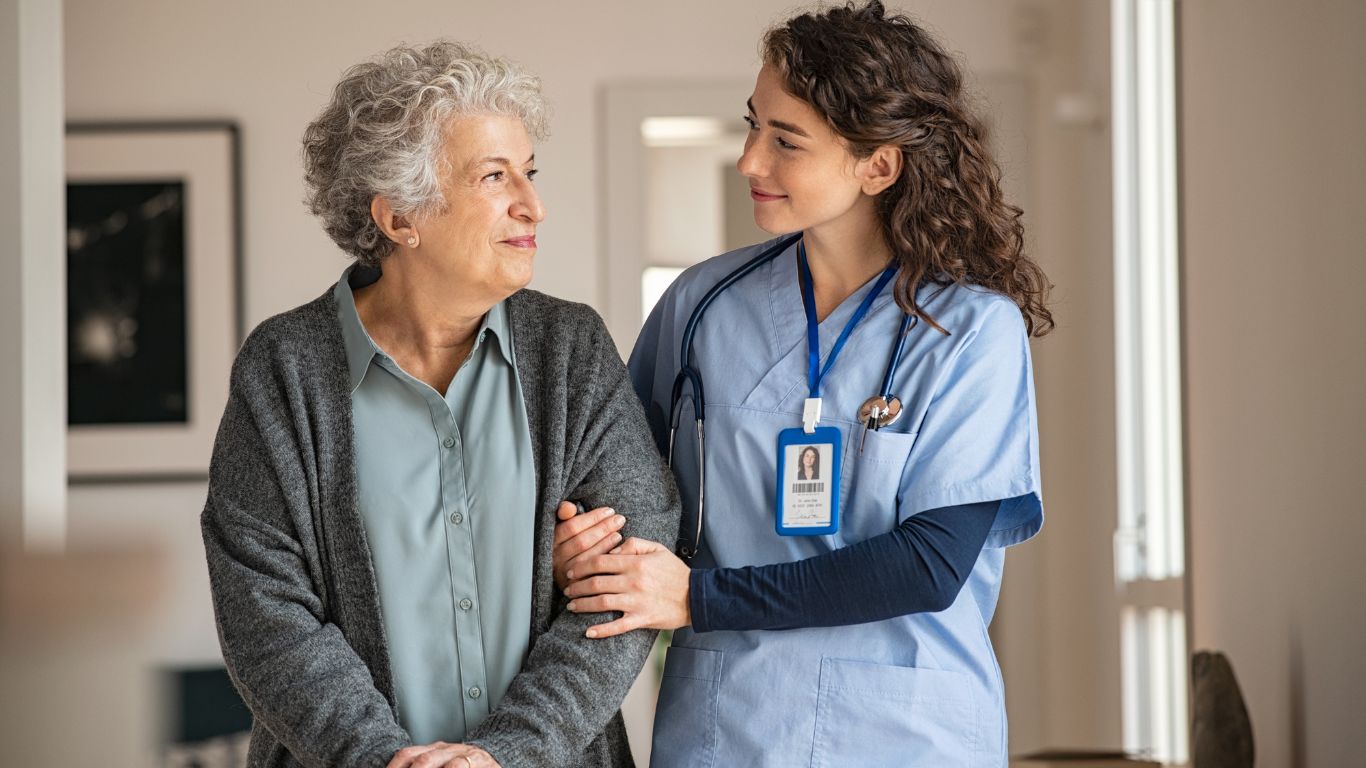
Aging adults often grapple with multiple challenges, of which, recuperation after an event such as a stroke is a significant one.
The road to recovery is frequently marked with hurdles like physical disabilities, speech and cognitive difficulties, and emotional setbacks. Our post-stroke care services have been designed to directly address these issues. We provide comprehensive care, including rehabilitative therapies, cognitive exercises, and emotional support, to help seniors regain their independence and enhance their quality of life.
Our specially trained staff works tirelessly, ensuring that each individual receives personalized care suited to their specific needs. Through our services, we aim to instill hope, fostering a brighter and healthier tomorrow for seniors.
How Our Post- Stroke Rehabilitation Program Works
Recovering from a stroke requires a structured, personalized plan. Our post-stroke rehabilitation program is designed to help you regain strength, mobility, speech, and independence through expert-led neurological care.
1. Comprehensive Stroke Recovery Assessment
Your journey begins with a detailed initial evaluation conducted by our stroke rehabilitation specialists. During this assessment, we:
- Review your medical history and stroke type (ischemic or hemorrhagic)
- Evaluate mobility, balance, and coordination
- Assess speech, swallowing, and cognitive function
- Identify daily living challenges (bathing, dressing, walking, etc.)
- Determine fall risk and home safety concerns
This comprehensive assessment allows us to understand your current functional level and recovery goals.
2. Personalized Post-Stroke Care Plan
Based on your evaluation, we develop a customized stroke recovery plan tailored to your specific needs. Your care plan may include:
- Physical therapy to improve strength and mobility
- Occupational therapy to restore independence in daily activities
- Speech and language therapy for communication and swallowing support
- Neurological rehabilitation exercises
- Balance and fall prevention training
- Caregiver education and support
Our goal is to maximize neuroplasticity and promote long-term recovery through targeted, evidence-based therapy.
3. Ongoing Monitoring & Adaptive Care
Stroke recovery is not a one-time process. We provide continuous care and progress tracking to ensure steady improvement.
- Regular reassessments to measure progress
- Adjustments to therapy intensity and exercises
- Coordination with physicians and specialists
- Ongoing patient and family education
As your strength and abilities improve, we evolve your treatment plan to match your recovery stage.
Why Choose Downey Community Health Center?
- Best Nursing Homes in America 2022, 2023, 2024, 2025
- Member of American Health Care Association (AHCA)
- Over 40 years of excellent service for residents of Downey and environs
- Member of California Association of Health Facilities (CAHF)
- Approved vendor by multiple insurance providers
- Member of Health Services Advisory Group (HSAG)
- Member of Cal Chambers (California Chamber of Commerce)
- Medicare and Medi-cal approved
Process & Methodology
Our process and methodology for post-stroke care are grounded in evidence-based practices and compassionate methodologies.
We understand that every client’s journey is unique, and we tailor our approach accordingly, ensuring that each step is guided by meticulous planning. We are committed to staying informed and incorporating the latest research findings into our practices.
This involves regular training for our staff and close monitoring of each client’s progress. Ultimately, at Downey Community Health Center, our aim is to provide care that not only aids in physical recovery but also addresses the emotional and psychological aspects of post-stroke rehabilitation.
Rest assured, we strive to offer our clients the best possible care for a brighter tomorrow.
What our Clients Say
— G.P.
Contact Us
Our dedicated team is ready to discuss how our personalized services can benefit you or your loved one. Please feel free to reach out to us at any time. Your brighter future is just a call or click away. Take a leap towards the improved quality of life you deserve. Contact us today!
Frequently asked Questions
If you’re new to senior living, you’re bound to have many questions during your search. Use these FAQs as a guide. If you have a question that are not answered below, feel free to contact us anytime (562) 862-6506
Post-stroke care refers to the specialized care and rehabilitation services provided to individuals following a stroke. The goal is to support the individual in regaining their strength, relearning skills, and achieving the highest possible quality of life.
The recovery timeline can vary greatly from individual to individual. Some people may see rapid improvement in the first few months following a stroke, while others may continue to recover at a slower pace over the course of several years.
Yes, there are various types of Post-Stroke Care services, including physical therapy, occupational therapy, speech-language therapy, and psychological counseling. The type of service an individual needs will depend on the specific challenges they are facing after their stroke.
Family members can provide emotional support, assist with daily activities as needed, and help their loved one adhere to their rehabilitation program. They can also help by learning as much as possible about stroke and post-stroke care, to better understand and support their loved one’s journey.
Absolutely. Adopting a healthy lifestyle, which includes a balanced diet and regular physical activity, can significantly aid in the recovery process and reduce the risk of future strokes. It’s also essential to regularly follow up with healthcare providers for ongoing management of stroke risk factors.